Key Answers in This Guide
- Where Tapukara Sits and Its Character: Tapukara sits in the Khairthal-Tijara district of Rajasthan, close to the Haryana border.
- Tapukara at a Glance: RIICO allots the industrial land in Tapukara, residential plots are priced by project and location rather than by a single locality rate, and the buyers on both sides are largely the manufacturers and factory staff already working in this belt.
- The Industrial Side: RIICO Land, Buyers and Caveats: Industrial land in Tapukara falls under RIICO, the Rajasthan state industrial development corporation.
- The Residential Side: Who Buys and What They Buy: Residential property in Tapukara serves the industrial population.
- Connectivity: Tapukara's connectivity is a road story rather than a rail one, and for what this pocket does it is a good story: the belt's own grid moves trucks between the industrial areas, and NH-48 moves them out of the belt.
- Who Should Buy in Tapukara, and Who Should Look Elsewhere: Buy in Tapukara if you fit one of these profiles.
In this guide
Tapukara is primarily an industrial pocket. Factories came first, and residential demand in Tapukara exists because those factories employ people who need to live nearby. If you understand that one fact, every price, every plot and every rental yield in this market starts to make sense.
We have dealt in the Bhiwadi belt since 2008. The split worth holding on to from the first page is that industrial land here is RIICO land, allotted and transferred through the corporation’s Bhiwadi Unit-II office in Bhiwadi, while residential plots and flats sit under the ordinary revenue and local-body framework and are priced project by project. Those are two different purchases with two different sets of paperwork, and almost everything below turns on which of them you are making.
Where Tapukara Sits and Its Character
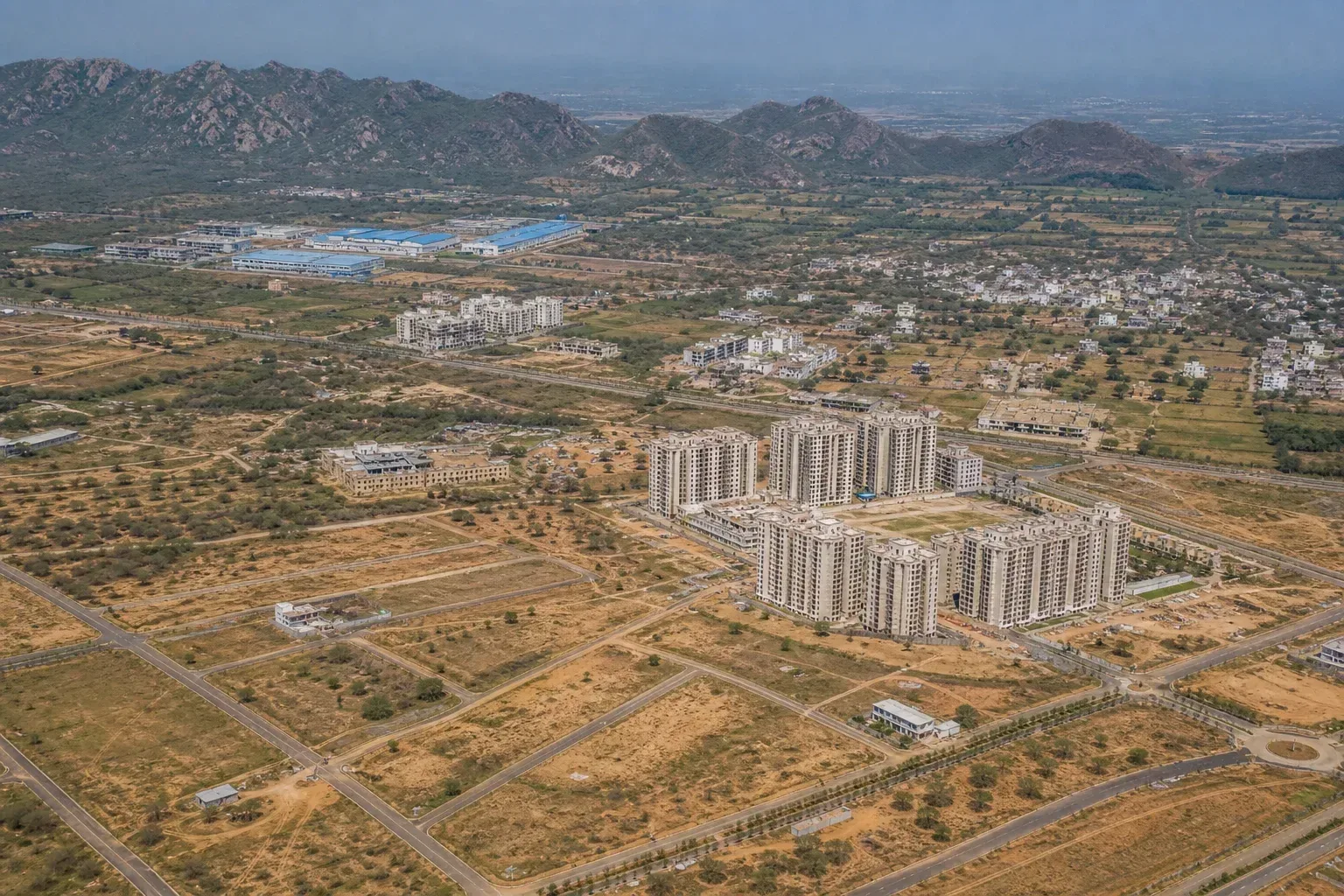
Tapukara sits in the Khairthal-Tijara district of Rajasthan, close to the Haryana border. It forms part of the wider Bhiwadi industrial belt, the corridor of RIICO industrial areas that runs through this district. The pocket is best known for its proximity to the Honda industrial zone, and the ecosystem of ancillary and supplier units that grew around large anchor manufacturers.
That history shapes the ground reality. Drive through Tapukara and you see factory sheds, RIICO road grids, transport yards, worker colonies, local markets and, in between, residential plotted land and housing that serves the industrial population. This is not a leisure destination and it does not pretend to be one. It is a working market.
Tapukara is an industry-led market; residential value here follows industrial activity, not the other way around.
For buyers, that has three practical consequences.
- Industrial land is the core product. RIICO governs industrial land here, and the deepest liquidity in Tapukara is in industrial plots and built-up factory units.
- Residential demand is tenant-driven. Managers, supervisors, engineers and workers employed in nearby units need housing. That demand supports both rentals and end-user purchases.
- The market moves with industrial sentiment. When units expand and new allotments happen, both industrial and residential transactions pick up. When industrial activity slows, so does everything else.
If you are comparing this pocket with its neighbours, read our Chopanki vs Khushkhera vs Tapukara comparison. Each of these three industrial pockets has a distinct profile, and Tapukara’s is the strong anchor-manufacturer ecosystem near the Honda zone. For the wider map of localities, see our guide to the best areas to buy property in Bhiwadi.
Tapukara at a Glance
RIICO allots the industrial land in Tapukara, residential plots are priced by project and location rather than by a single locality rate, and the buyers on both sides are largely the manufacturers and factory staff already working in this belt.
| Aspect | Detail |
|---|---|
| District | Khairthal-Tijara, Rajasthan |
| Belt | Bhiwadi industrial belt, near the Haryana border |
| Character | Industry-led; anchored by the Honda industrial zone ecosystem |
| Industrial land authority | RIICO |
| Indicative industrial land rate | Around ₹35,000 to ₹40,000 per sq m (indicative, partner-confirmed 22 Jul 2026; contact us for current rates) |
| Residential plot rates | ₹20,000 to ₹35,000 per gaj in Tapukara proper; ₹16,000 to ₹32,000 per gaj across most closings on the Tapukara to Tijara stretch (partner-confirmed, July 2026; indicative, contact us for current rates) |
| RIICO unit office for this area | Bhiwadi Unit-II, Rest House Road, Bhiwadi, Alwar 301019 |
| Named extension | Karoli, which RIICO records as the Tapukara extension with its own layout plan |
| Typical industrial buyers | Manufacturers, auto ancillaries, MSME units, industrial investors |
| Typical residential buyers | Factory owners and staff, rental investors, plot buyers building for self-use |
| Connectivity | Well connected via the Bhiwadi belt road network and the NH-48 corridor |
Figures above are indicative only. Rates in this belt move with allotment activity and demand; always confirm current numbers before you commit.

The Industrial Side: RIICO Land, Buyers and Caveats
Industrial land in Tapukara falls under RIICO, the Rajasthan state industrial development corporation. RIICO develops the industrial areas, allots plots, maintains the internal infrastructure and controls what each plot may be used for. If you are new to this system, start with our RIICO industrial plots buyer’s guide; it explains allotment, transfer and dues in detail. If you are weighing RIICO land against a private parcel on the periphery, our comparison of RIICO plots and private industrial land sets the two side by side. What follows is the Tapukara-specific picture.
Two RIICO facts about this pocket are worth knowing before you start searching, because both change what “available in Tapukara” means. Tapukara sits under RIICO’s Bhiwadi Unit-II office on Rest House Road in Bhiwadi, which is the office that holds the allotment file, issues the dues position and processes the transfer for a plot here. And RIICO’s layout-plan index records a separate industrial area named Karoli as the Tapukara extension, with its own published layout plan. A buyer told there is nothing available in Tapukara has usually been told about Tapukara proper, not about the extension next to it, so ask for both by name.
Who buys industrial property here
Four broad groups drive industrial demand in Tapukara.
- Manufacturers setting up their own unit. Auto ancillaries and component makers dominate because of the anchor plants in and around the Honda zone, but engineering, packaging and general manufacturing units also buy here.
- Existing units expanding. A unit already running in the belt often buys an adjacent or nearby plot when capacity grows. These buyers know the market and move fast.
- MSME owners moving out of rented sheds. Owning the plot removes rent risk and lets them build to their own specification.
- Industrial investors. Some buyers purchase RIICO plots or built-up sheds to lease to operating units. Rental demand from ancillaries makes this viable, though it carries compliance obligations that residential landlords never face.
For the reasons units keep choosing this belt over other NCR locations, read why manufacturers choose Bhiwadi.
Indicative rates
Industrial land in Tapukara currently transacts at around ₹35,000 to ₹40,000 per sq m. Treat this as indicative only; it was partner-confirmed on 22 July 2026 and rates move. Contact us for current rates before you build any costing on it. Where a specific plot sits within that range depends on plot size, road width, corner position, distance from the anchor units and whether the plot is a fresh allotment or a resale with construction on it.
On industrial land, the quoted rate is the start of your cost, not the end of it; transfer charges, pending RIICO dues and construction obligations all sit on top.
Permitted use and transfer caveats
Five conditions travel with a RIICO plot regardless of what the seller tells you, and each of them is checked against RIICO’s record for that specific plot rather than against the sale papers.
- Permitted use is plot-specific. RIICO allots plots for defined industrial purposes. A plot allotted for one category of activity cannot simply be used for another. Before you buy, confirm in writing that your intended activity is permitted on that specific plot.
- Resale plots need RIICO transfer approval. Buying a RIICO plot in resale is not a plain registry transaction. The transfer must be processed through RIICO, transfer charges apply, and the transfer can be held up if the seller has pending dues.
- Check for pending dues and penalties. Service charges, economic rent, retention charges and time-extension penalties can accumulate against a plot. These liabilities effectively travel with the plot. Get a current dues statement before you pay anything.
- Construction timelines apply. RIICO expects allottees to build and start production within defined timelines. If the plot you are buying has an expired timeline, understand the extension position and its cost before you sign.
- Built-up units need extra checks. If you are buying a shed or factory building, verify the building plan approvals, factory compliances and any charge a lender holds over the property.
This is an ordinary, well-worn process rather than an obstacle course. RIICO’s own layout-plan index carries thirteen industrial areas across its two Bhiwadi unit offices, Tapukara and Karoli among them, and units have been buying, transferring and building on that land for decades. What the list above means in practice is only that each condition is settled from RIICO’s current record for your plot, before money moves, and not from anybody’s assurance. Our page on industrial property in Bhiwadi covers the broader industrial market across the belt if Tapukara alone does not fit your requirement, and our industrial property site visit checklist covers what to look at when you walk the plot.
The Residential Side: Who Buys and What They Buy
Residential property in Tapukara serves the industrial population. That is its strength and its limit. You will not find the kind of speculative end-user demand that a metro suburb sees; you will find steady, employment-linked demand that exists because tens of thousands of people work in the surrounding units.
Who buys residential property here
- Factory owners and senior staff who want to live near their unit. Cutting the daily commute to minutes is a real quality-of-life gain for someone running a plant.
- Employees buying their first home. Supervisors and mid-level staff who have worked in the belt for years often prefer to buy where they work rather than keep paying rent.
- Rental investors. The tenant pool is the industrial workforce. Demand is steady because it is tied to jobs, and vacancy tends to be short when nearby units are running well.
- Plot buyers building for self-use. Many buyers in this pocket prefer a plot they can build on in stages, matching construction to their cash flow.
Plot or flat
Both exist in the Tapukara-Tijara belt, and the choice follows the same logic we set out in our guide to plots in Bhiwadi.
A plot gives you control. You choose the design, build in stages and hold land whose value is not tied to a builder’s execution. The trade-off is effort; you manage construction, approvals and contractors yourself, and you must verify the land’s title and use conversion with extra care because plotted developments vary widely in their approval status.
A flat gives you convenience. You get a finished unit, shared maintenance and a faster move-in. The trade-off is dependence on the project’s approvals, construction quality and the builder’s delivery. In an industrial pocket, also check who your neighbours will be; a project full of investor-owned rental units feels different from one full of owner-occupiers.
What residential plots cost here
Residential plot rates in this pocket are quoted per gaj, and on our own rate card they track distance from the Honda plant more closely than they track anything else. In Tapukara proper the band runs ₹20,000 to ₹35,000 per gaj. Across the wider Tapukara to Tijara stretch, most of what actually closes sits between ₹16,000 and ₹32,000 per gaj. Both figures were partner-confirmed in July 2026, both are indications from our own rate card rather than quotations on a specific plot, and both move, so contact us for current rates before you build a budget on them.
The townships we transact in show that gradient plainly. Nearest the plant, VBHC and Krish Season both sit at ₹23,000 to ₹35,000 per gaj. Along the corridor, Ekta Enclave is at ₹30,000, Aqasia Homes at ₹25,000 to ₹26,000, Terra City at ₹19,000 to ₹20,000 and Lifestyle City at ₹16,000 to ₹17,000. At the Tijara end, Chanderlok City is at ₹13,000, which is below the closings band above precisely because it sits at the far end of the corridor. Our plot projects compared guide puts these side by side with the rest of the belt.
That gradient is the residential decision in this pocket: what you save per gaj by moving towards Tijara you give back in distance from the plant, and in a market where the plant supplies the tenant, distance from it is what the rent follows.
Why residential demand here is durable
The honest case for residential Tapukara is simple. Industrial employment creates housing demand within commuting distance, and that demand renews itself as long as the units run. When new industrial investment lands in the belt, the workforce grows and housing demand grows with it. That is a slower, steadier driver than metro-style speculation, and it suits buyers who think in rental yield and long holding periods rather than quick exits. For the broader investment case across the belt, see why invest in Bhiwadi.
That renewal is not hypothetical. Honda Motorcycle & Scooter India announced on 20 March 2026 a third production line at the Tapukara plant, an investment of about ₹1,500 crore, planned to add 6.7 lakh units of annual capacity from 2028 and create over 2,000 jobs. The company describes the additional 73,700 sq m of land as land it will purchase, not land it has already acquired, so treat this as a confirmed plan rather than a completed expansion when you weigh the timeline. (Honda Motorcycle & Scooter India newsroom)
The flip side is equally honest. Residential Tapukara depends on industrial Tapukara. If you would not be comfortable owning property whose demand is tied to the health of a manufacturing belt, this is not your market.
Connectivity
Tapukara’s connectivity is a road story rather than a rail one, and for what this pocket does it is a good story: the belt’s own grid moves trucks between the industrial areas, and NH-48 moves them out of the belt.
The pocket sits inside the Bhiwadi belt road network, which links the RIICO industrial areas to each other and onwards to the NH-48 corridor. That corridor is the spine that connects this belt towards Delhi, Gurugram and Jaipur. For a manufacturing unit, what matters is truck movement to suppliers, customers and ports of exit; the belt’s road grid and highway access serve that daily.
The Haryana border sits close by, which matters more than it sounds. Units here draw workers, vendors and services from both states, and staff living on either side of the border commute in. For a resident, daily needs are met locally and in Bhiwadi town, with bigger city trips running via the same highway corridor.
Do not buy on the promise of future infrastructure alone. Announced projects in any growth corridor can shift in scope and timing. Buy on what serves the pocket today, and treat future connectivity as upside, not as the base case. If a specific road or project matters to your decision, ask us for the current ground position rather than relying on old news reports.
Who Should Buy in Tapukara, and Who Should Look Elsewhere
Buy in Tapukara if you fit one of these profiles.
- A manufacturer or ancillary unit that wants to sit near the anchor plants and their supplier ecosystem. Proximity to the Honda zone ecosystem is Tapukara’s core industrial advantage.
- An MSME owner ready to move from rented premises to an owned RIICO plot, with the patience to run the transfer and compliance process properly.
- An industrial investor who understands RIICO rules and wants to lease built-up space to operating units.
- A rental investor who wants tenant demand backed by jobs rather than by hope. The industrial workforce is the tenant pool here.
- An employee or business owner in the belt buying a home near their work.
- A patient plot buyer who wants land in a working corridor and can hold through industrial cycles.
Look elsewhere if any of these describe you.
- You want a polished residential suburb first and returns second. Tapukara is a working industrial pocket. Parts of Bhiwadi town and other sectors offer a more residential feel; our best areas guide maps them.
- You need quick liquidity. Industrial plots and belt residential property both reward patience. If you may need your money back within a year or two, this is the wrong asset.
- You want to buy without doing verification work. RIICO transfers, permitted-use checks and title diligence are non-negotiable here. A buyer unwilling to do them should not buy in this pocket, or should not buy at all.
- You are choosing between industrial pockets on price alone. Chopanki, Khushkhera and Tapukara price differently for reasons tied to their ecosystems. Read the three-way comparison before you decide on rate alone.
How Buying Industrial Differs From Buying Residential Here
Buyers who have only ever bought a house underestimate how different an industrial purchase is. In Tapukara the two transactions differ at almost every step. Our detailed comparison of residential vs industrial property in Bhiwadi covers the belt-wide picture; here is how it plays out in this pocket.
| What differs | Industrial plot in Tapukara | Residential plot or flat here |
|---|---|---|
| Governing authority | RIICO, with its own allotment terms, dues and transfer process | The general revenue and local-body framework, with approvals depending on the type of project |
| Transfer | Needs RIICO’s transfer approval and transfer charges on top of the registry; skip it and the transfer does not exist in RIICO’s records | Completes through agreement, payment and registry once title is clear, followed by namantaran in the revenue record |
| Dues to check | Service charges, economic rent, retention and extension penalties, all on RIICO’s ledger for that plot | Loans, litigation and unpaid local charges |
| Use restrictions | Tied to a permitted activity; changing it needs RIICO’s process, not your intention | A house is a house |
| Ticket size and negotiation | Larger, slower, document-heavy; sellers are usually businesses and terms turn on dues, timelines and possession condition as much as on rate | Smaller and faster, and rate does most of the negotiating |
| Financing | Usually business banking channels, and the lender wants the RIICO paperwork clean before sanction | Standardised home loans, widely available |
| Exit | Few, specific buyers; the plot can wait for the right one, and its price depends heavily on its compliance position on the day | Many small buyers, so a sound plot or flat finds one faster |
If terms like allotment, transfer charge, conversion or economic rent are new to you, our Bhiwadi property glossary defines them in plain language.
Verification and Next Steps
The order in which you do the checks matters more than the checks themselves, because money paid before a step is money you are relying on goodwill to get back. The sequence below applies to both industrial and residential purchases in Tapukara, with the industrial list running longer.
First, understand what a dealer’s checks are and are not. We verify what we can see: ownership documents, the chain of past transactions, the plot’s position on the ground and, for RIICO plots, the visible allotment and transfer papers. These checks are preliminary. They filter out obviously bad deals; they do not replace legal diligence.
Our checks are a first filter; title must be verified by your own independent lawyer, and RIICO figures and permitted use must be confirmed with RIICO for the specific plot before you pay.
For an industrial plot, your sequence should be:
- Shortlist plots that fit your size, budget and activity. Confirm your activity is permitted on each shortlisted plot.
- Obtain the current RIICO position from the Bhiwadi Unit-II office that holds the file: allotment status, dues statement, construction-timeline status and any recorded charge or lien.
- Have your lawyer verify the title chain and the seller’s authority to sell, independently of anything we or the seller show you.
- Agree terms that state clearly who clears pending dues and who bears transfer charges.
- Complete the RIICO transfer process and the registry, in the correct order, with payments tied to milestones.
For residential property, the sequence is shorter but no less strict: title chain, land-use and approval status of the project or plotted scheme, encumbrance check, and a site visit before any bayana leaves your hands. Never buy a residential plot in this belt on photographs and a location pin; walk the plot, check the approach road and see what surrounds it.
On costs, budget beyond the property rate. Stamp duty and registration charges apply at prevailing Rajasthan rates, and industrial buyers add RIICO transfer charges and any dues settlement. Confirm all current figures at the time of your transaction; we do not quote them here because they change.
Shivam Properties has worked this belt since 2008 and is a Rajasthan RERA-registered agent, registration number RAJ/A/2026/21898. If you want current availability in Tapukara, current rates or a site visit, our homepage explains how we work and how to reach us.
Frequently Asked Questions About Property in Tapukara
Is Tapukara a good place to buy property in 2026?
It depends on your purpose. For a manufacturing unit or ancillary, Tapukara’s ecosystem around the Honda industrial zone is a genuine advantage. For a rental investor, the industrial workforce provides steady tenant demand. For a buyer wanting a polished residential suburb or quick resale, other parts of the Bhiwadi belt fit better. Match the pocket to your goal, not the other way around.
What is the current rate for industrial land in Tapukara?
Industrial land in Tapukara transacts at around ₹35,000 to ₹40,000 per sq m. This is indicative, partner-confirmed on 22 July 2026, and rates move with demand and allotment activity. Contact us for current rates before you plan a purchase, and remember that transfer charges and any pending RIICO dues sit on top of the land rate.
What do residential plots cost in Tapukara?
In Tapukara proper the band is ₹20,000 to ₹35,000 per gaj, and across the wider Tapukara to Tijara stretch most closings sit between ₹16,000 and ₹32,000 per gaj, both partner-confirmed in July 2026. Where a specific township lands inside that spread follows its distance from the plant more than anything else, from ₹23,000 to ₹35,000 at VBHC and Krish Season nearest the Honda zone down to ₹13,000 at Chanderlok City at the Tijara end. These are indications from our own rate card, not quotations on a plot, and they move; contact us for current rates on the option you are actually considering.
Can I buy a RIICO plot in Tapukara and use it for any business?
No. Each RIICO plot carries a permitted use, and your activity must fall within it. Changing the use needs RIICO’s process and approval. Confirm permitted use for the specific plot with RIICO before you commit; this is one of the most common points where industrial buyers go wrong.
Is residential property in Tapukara good for rental income?
The tenant pool is the industrial workforce: staff, supervisors and workers employed in nearby units. That demand is steady while the units run well, and vacancy periods tend to be short. The dependence cuts both ways; rental demand here tracks industrial activity, so treat it as an employment-linked market rather than a metro-style one.
How is a RIICO plot purchase different from a normal property purchase?
A normal residential sale completes through agreement, payment and registry once title is clear. A RIICO plot resale additionally requires RIICO’s transfer approval, payment of transfer charges and clearance of any pending dues on the plot. Until the transfer is recorded with RIICO, the purchase is not complete in the way that matters.
Do I still need a lawyer if a dealer has checked the property?
Yes, always. A dealer’s checks are preliminary; they filter deals and flag obvious problems. Title verification needs your own independent lawyer, and for industrial plots the RIICO dues, timeline and permitted-use position must be confirmed with RIICO directly for that specific plot. Pay only after both checks are done.
Continue Reading


Ready to Shortlist? Talk It Through With Us
18+ years in this market. Real prices, verified paperwork, no pressure.
Choose what you would like to do next:
Done. Our team will contact you during working hours.